Unity is not free
What makes a thing one? An answer that fits in a single line — and that you can test with a kick on a pebble beach.
What makes a thing one? Metaphysics has been asking the question since Aristotle and still has no accepted answer. Here is one. It fits in a single line, and a kick is enough to test it.
Two camps share the field. For the first, unity is given: a thing is one the way it is grey, it is a property, end of story. For the second, unity is in our eye: the world is a flux, and it is we who cut things out of it to the measure of our words. They disagree about everything, except the essential: for both alike, unity costs nothing. That is where they are wrong.
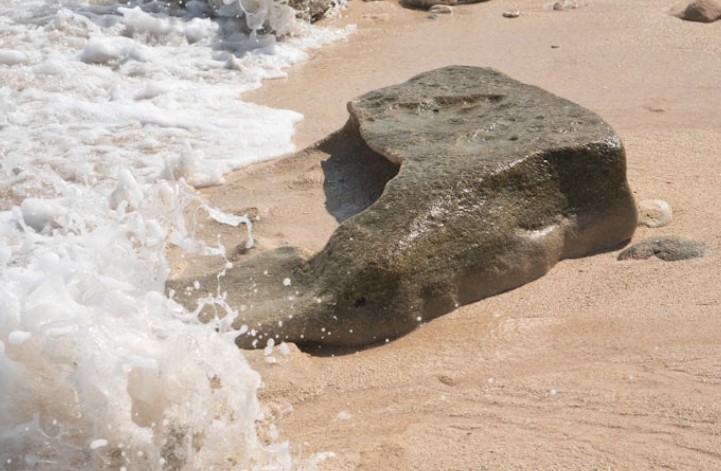
Go to a pebble beach and deliver two kicks. The first into the sand: it scatters, and nothing is damaged, each grain leaves with what it had. The second into a pebble: a chip flies off, and it is the pebble that lost it. The pebble and the sand are made of the same grains. Matter therefore does not decide, and the first camp can only note the difference without explaining it. If the wave splits the pebble tonight, there will be two of them by morning, whether anyone is looking or not: the second camp has nothing to do with it. What decides is where the loss falls. In the pebble, it always falls in the same place. In the sand, it falls nowhere.
Unity is therefore neither a state nor a point of view: it is an expenditure. No one carved the pebble, and it is the craftsman of nothing. It makes itself one, the way day breaks. But it pays with every tide, and its roundness is its account statement. Its unity is not a purchase, it is a rent. Spinoza had seen that every determination is a negation, that the outline of a thing is the line where it ceases. What remained to be said is on whom the price of that line falls. It falls on the one who is, at their own expense.
There is therefore only one criterion for everything that claims to be one: the pebble, the animal, the company, you. You are not one because you bear a name, nor because others see you as one. You are one as long as what you lose falls on you. Nothing you pay with comes from you: it was given to you. But the loss is yours. Your identity is not a statue, it is a scar.
The two camps give unity away. This sentence makes it pay.