What if the real problem isn't substance vs process — but the presupposition they share?
For 2,500 years, we've oscillated between substance and process. But both camps cut in the same place: being on one side, doing on the other. What if the cut itself is the problem?
We have been oscillating for 2,500 years between two images of what is: substance vs process.
On one side, things are: a stable core, change passes over it. On the other, things become: flux comes first, stability is a surface effect. Most of us lean toward one camp or the other, even without framing it in those terms.
(From Parmenides — being is, becoming is mere appearance — through to Lowe. From Heraclitus — everything flows, stability is illusion — through to Rescher.)
But the two positions share a presupposition that neither one questions: being and doing are two distinct things. Substance puts being underneath and doing on top. Process reverses the hierarchy. But both cut in the same place. What if the cut itself is the problem?
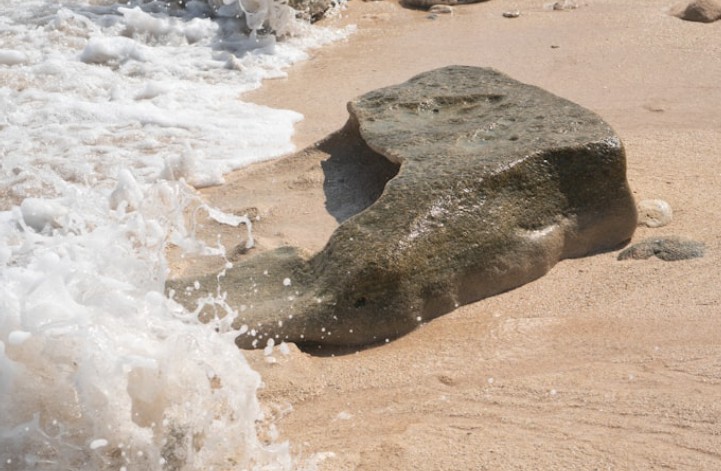
Take a stone.
The substratist files it under “substance” — given, inert, it just sits there. The processualist files it under “becoming” — it erodes, it changes, therefore it is flux. But neither truly looks at it. The stone is not given — it absorbs pressures, degrades, persists under constraint. And it does not become something else — it remains a stone while doing so. But “persisting” is not free: at the molecular scale, the stone holds together — bonds, cohesion, aggregation maintain a structure under pressure. This holding-together is already a doing, however minimal. The stone is neither a substance at rest nor undifferentiated flux. It makes itself — in the most elementary sense: it holds at its own expense. To be is to make oneself.
Substratism misses the cost: it posits the stone as given, when in fact it persists under pressure — that is not free. Processualism misses the persistence: it sees change, but the stone does not become something else — it remains itself while doing so. Both miss the same phenomenon, each through its own blind spot.
Self-making here does not mean changing. To change is to become other — and we fall back into processualism. The stone does not become something else. It persists in act — under pressure, at its own expense. Self-making is not movement; it is costly maintenance. This is precisely what the being/doing cut prevents us from seeing: something can be without being given, and do without becoming other. To absorb self-making into changing is to lump the stone and the organism back together — exactly the problem we started with.
If we drop the cut, a distinction appears that neither camp can formulate. The stone makes itself — but it does not remake itself. It does not regenerate its own conditions. The organism, on the other hand, remakes itself: it replaces, repairs, compensates — it maintains itself by reconstituting itself. The difference is not between being and becoming. It is between self-making and self-remaking. And that difference, neither substratism nor processualism can see — because they have already separated being and doing before they get there.
The simplest test for this idea: if self-making is just a synonym for changing, then the distinction between the stone and the organism collapses, and the idea falls apart. If you can show that self-making = changing, everything above crumbles.
Now that the cut is visible — where else do you see it operating unquestioned?
This text poses the starting problem. For the developed answer: To be is to make oneself; to be a self is to remake. For the full framework: What is Ontodynamique?